

Why Taekwondo Classes Work for Every Fitness Level

Fitness journeys are unique to each person. Some people start with zeal, while others prefer a slow progression. Taekwondo classes provide well-rounded training that adjusts to one’s fitness level; therefore, they are suitable for novices, intermediate students, and advanced students. Aside from applying pressure to specific limits, the art of taekwondo incorporates the restoration of power, the pressures of flexibility, and concentration equally.
Such an approach allows one to maintain consistent, enthusiastic, and assured engagement regardless of the level of functioning.
How Does Taekwondo Adapt to Different Fitness Abilities?
Taekwondo is an art form that requires flexibility and adaptability, as every move can be adjusted to match strength, mobility, and coordination. Thus, it provides trainees with a safe, comfortable learning environment.
These include
Control over movements
Balanced physical effort
Gradual conditioning
Minimization of the injury risk
The techniques gradually develop the body while avoiding strenuous and incorrect moves.
Balanced Conditioning Through Natural Movement
Taekwondo combines cardiovascular training with strength, flexibility, and coordination. Its movements are specifically designed to exercise the entire body rather than just targeted muscle groups, and they improve mobility and posture.
This full-body involvement helps develop stamina, joint mobility, and muscle tone, all of which make daily movements feel easier and more controlled. Balance-building and increases in energy come over time as well.
How Does Gradual Progress Build Confidence?
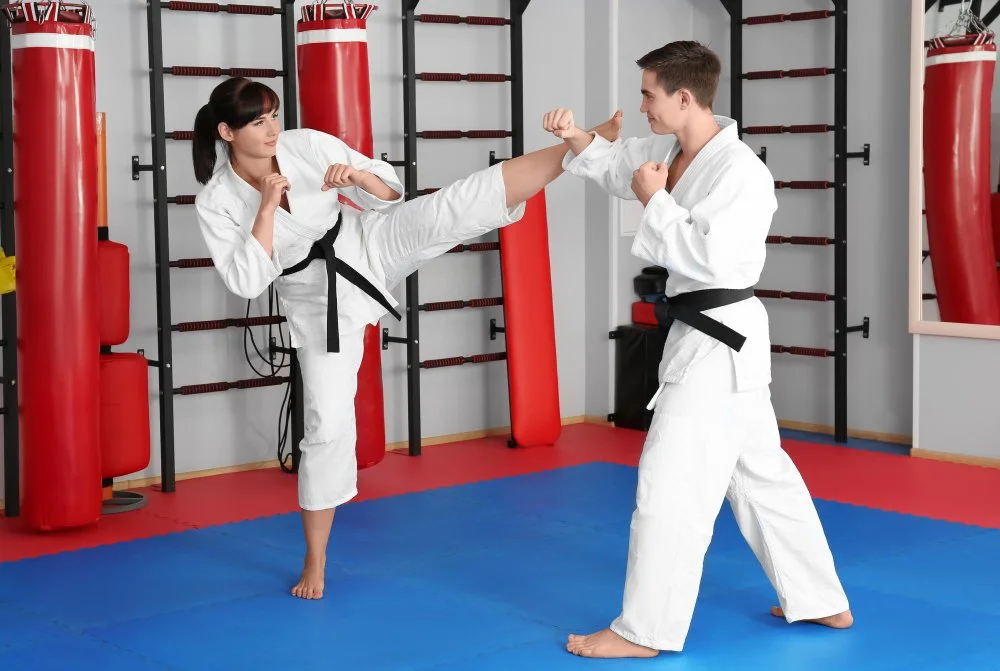
Steady improvement is crucial for motivation. In Taekwondo, progress is based on developing skills rather than figuring out tactics and being patient. These become the focus for learners.
A well-organized taekwondo class for beginners begins with slow movements, allowing every participant to get in touch comfortably from the start. As skills are polished over time, one will inevitably become more confident about continuing to attend classes and even going beyond that.
Developing Mental Focus Alongside Physical Fitness
Mental training, an essential component of Taekwondo, involves qualities such as attentiveness, awareness, and emotional management. In structured training, those engaged in breathing control will be able to leverage redundancy and focus.
The strong mental involvement helps:
Better stress management
Improved concentration
Emotional stability
Calm decision-making
How Does Taekwondo Encourage Long-Term Fitness Habits?
Short-term exercise programs generally lead to fatigue or loss of motivation. Taekwondo, in sharp distinction, is all about slow and steady gains to improve without getting to the point of being physically worn out.
This means conditioning oneself to achieve a more consistent habit of strength, agility, flexibility, and mind power. The inherent stability of such an approach keeps individuals active and engaged throughout every stage of life.
Conclusion: A Balanced Path to Strength and Confidence
An effective fitness program should encompass both physical development and mental motivation. Providing a conducive environment in ATA taekwondo schools is a great contribution to gradual progression along a structured outline and to encouraging. At Fort ATA Martial Arts, every student, regardless of fitness level, receives an individualized program to improve strength, flexibility, attention, and self-worth.
Are you ready for the kind of training that helps you grow without the pressure often found in a competitive environment? Fort ATA Martial Arts provides a nurturing and welcoming space where one can start working on that endeavor. Learn how meaningful, controlled movements can pave the way for overall fitness and inner balance.